


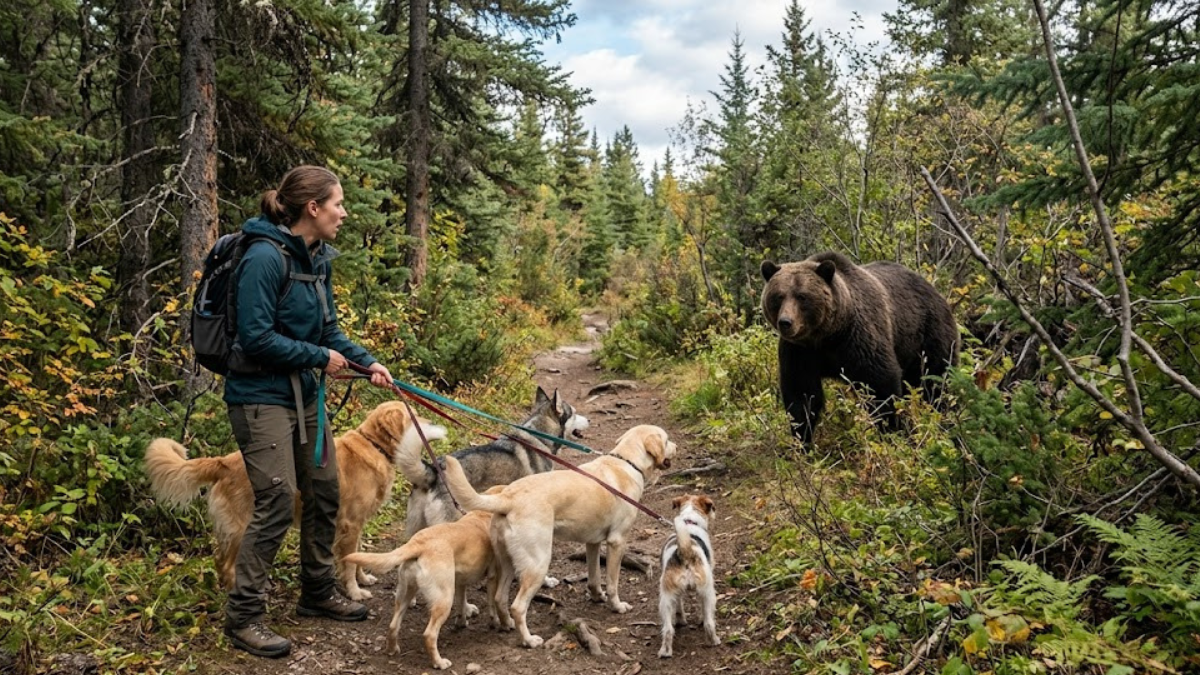
A grizzly bear dog walker encounter is one of those rare but high-stakes wildlife situations that outdoor lovers should never ignore. It usually happens when a person walking a dog crosses paths with a grizzly bear in forested or mountain regions. These moments are unpredictable, intense, and can escalate quickly if not handled properly.
Understanding a grizzly bear dog walker encounter is not about fear—it’s about preparation. Dogs can unintentionally trigger a bear’s defensive instincts, making the situation more dangerous than a human-alone encounter. Knowing how these situations unfold can make all the difference.
In this guide, we’ll break down how a grizzly bear dog walker encounter happens, why it escalates, and what steps can reduce risk. Whether you hike regularly or just enjoy nature walks, this information is essential for safety.
Understanding a Grizzly Bear Dog Walker Encounter
A grizzly bear dog walker encounter typically begins when a dog detects or approaches a bear before the human even notices. Dogs may bark, chase, or run toward wildlife, which can surprise or agitate a bear.
In many documented cases, the grizzly bear dog walker encounter escalates because the bear feels threatened by both the dog and the owner trying to control it. Grizzlies are highly protective of their space, especially if cubs are nearby.
Wildlife experts often note that these encounters are more complex than standard bear sightings because there are three variables involved: the bear, the dog, and the human reaction. This makes predicting outcomes more difficult.
Why Dog Walkers Are More at Risk
Dog walkers face higher risk during a grizzly bear dog walker encounter because dogs are naturally curious and territorial. They often run ahead on trails, reducing the owner’s control in critical moments.
Another issue is noise. Barking or sudden movement from a dog can startle a bear, increasing the likelihood of a defensive response. In a grizzly bear dog walker encounter, this reaction can happen within seconds.
Leashes also play a role. Off-leash dogs may trigger a bear and then return to their owner, unintentionally leading the bear directly toward the human instead of away.
Real-Life Scenarios of Grizzly Bear Dog Walker Encounter
One commonly reported grizzly bear dog walker encounter involves a dog chasing a bear cub unknowingly. The mother bear responds aggressively, forcing the owner into a dangerous retreat situation.
In another scenario, hikers describe their dog suddenly freezing and growling before a grizzly bear appeared on the trail. The grizzly bear dog walker encounter escalated quickly, forcing both human and dog to back away slowly without sudden movements.
Wildlife officials often analyze these incidents to understand patterns. Most reports show that surprise and proximity are the biggest triggers in a grizzly bear dog walker encounter.
| Scenario Type | Trigger | Outcome |
|---|---|---|
| Dog chases bear | Curiosity | Defensive charge |
| Sudden trail meeting | Surprise | Aggressive display |
| Cub protection case | Maternal instinct | High-risk encounter |
| Off-leash behavior | Loss of control | Escalation risk |
Safety Precautions During a Grizzly Bear Dog Walker Encounter
The best defense in a grizzly bear dog walker encounter is prevention. Keeping dogs on a leash is the first and most important rule in bear country.
Carrying bear spray is another essential precaution. Experts say it significantly reduces injury risk in a grizzly bear dog walker encounter when used correctly and at close range.
Making noise while walking can also help prevent surprise meetings. Talking, clapping, or using bells alerts wildlife to your presence before you enter their space.
What to Do If You Face a Grizzly Bear Dog Walker Encounter
If a grizzly bear dog walker encounter happens, staying calm is critical. Sudden movements or running can trigger a chase response in bears.
Experts recommend slowly backing away while keeping your dog close. In a grizzly bear dog walker encounter, separating yourself from the dog can sometimes reduce tension.
Avoid direct eye contact but keep the bear in sight. Speaking calmly helps signal that you are not a threat while maintaining awareness of the situation.
Expert Insights and Wildlife Behavior
Wildlife biologists explain that bears usually avoid humans unless surprised or provoked. In a grizzly bear dog walker encounter, the dog is often the unintentional trigger.
“Most bear incidents are defensive, not predatory. The key is avoiding surprise and stress for the animal,” says a wildlife behavior specialist.
Experts also highlight that grizzlies rely heavily on memory and territory awareness. A grizzly bear dog walker encounter often happens in areas where bears regularly travel or feed.
Understanding bear body language—such as huffing, paw stomping, or head lowering—can help predict behavior during a grizzly bear dog walker encounter.
Prevention Strategies and Gear
Preparation is the strongest defense against a grizzly bear dog walker encounter. Carrying the right gear and knowing how to use it reduces risk significantly.
Here are some practical prevention strategies:
| Strategy | Purpose |
|---|---|
| Leash control | Prevent dog from running ahead |
| Bear spray | Emergency defense tool |
| Noise making | Avoid surprise encounters |
| Group walking | Reduces risk of isolation |
| Trail awareness | Avoid known bear zones |
Wearing visible clothing and staying alert also helps reduce the chance of a sudden grizzly bear dog walker encounter. Avoid wearing headphones while hiking in bear territory.
Choosing well-traveled trails is another smart strategy. Bears are less likely to linger in high-traffic areas, reducing the chance of a grizzly bear dog walker encounter.
Common Mistakes People Make in Bear Country
One of the biggest problems in a grizzly bear dog walker encounter situation is human error. Many hikers assume bears will always avoid them, which leads to careless behavior on trails.
A very common mistake is letting dogs roam freely. Off-leash pets often move far ahead, increasing the chance of a sudden wildlife surprise. In a tense situation like this, reaction time becomes extremely limited.
Another mistake is ignoring warning signs such as fresh tracks, scat, or animal carcasses. These signs often indicate that a bear is actively using the area, raising the risk of a dangerous wildlife interaction.
People also underestimate noise control. Loud music or headphones reduce awareness, making it easier to walk into an unexpected grizzly bear dog walker encounter scenario without any warning.
Training Your Dog for Wilderness Safety
Proper training can significantly reduce risks in a grizzly bear dog walker encounter. A well-trained dog responds quickly to recall commands, even under stress or distraction.
Basic obedience training is essential. Commands like “come,” “heel,” and “stop” can prevent a dog from running toward wildlife and triggering a dangerous reaction.
In high-risk areas, experienced hikers recommend practicing controlled walking with distractions. This helps dogs stay calm even when encountering unfamiliar scents or sounds in bear territory.
Consistency is key. A dog that reliably responds to commands is far less likely to escalate a grizzly bear dog walker encounter into a serious incident.
Seasonal Risk Patterns in Grizzly Regions
The risk of a grizzly bear dog walker encounter changes depending on the season. In spring and early summer, bears are more active as they search for food after hibernation.
During late summer and fall, bears enter a feeding phase called hyperphagia. They become highly focused on food sources, which can increase territorial behavior on trails.
Weather also plays a role. Cooler mornings and evenings are peak activity times, making these periods more likely for a grizzly bear dog walker encounter in forested regions.
Understanding seasonal patterns helps hikers plan safer routes and times for outdoor activity.
Emergency Response Checklist
When facing a high-risk wildlife situation, having a clear mental checklist can help you respond effectively. In a grizzly bear dog walker encounter, every second matters.
| Action Step | What to Do |
|---|---|
| Stay calm | Avoid panic or sudden movement |
| Control dog | Keep it close and quiet |
| Assess distance | Identify bear behavior |
| Back away slowly | Do not turn or run |
| Use bear spray | Only if the bear approaches |
Preparation is not just physical—it’s mental. Knowing what to do ahead of time improves survival outcomes in a grizzly bear dog walker encounter.
Myths vs Reality About Bear Encounters
There are many myths surrounding bear behavior that can make situations more dangerous than they need to be. One common myth is that bears always attack on sight.
In reality, most bears avoid humans and only react defensively when surprised or threatened. A grizzly bear dog walker encounter is usually triggered by miscommunication in space and behavior.
Another myth is that running away is the safest option. In truth, running can trigger a chase instinct, increasing danger significantly.
“Understanding bear behavior is more important than fearing it. Most incidents happen because of misunderstanding, not aggression.”
Learning the truth helps reduce panic and improves decision-making during unexpected wildlife encounters.
Conclusion
A grizzly bear dog walker encounter is rare but serious, and understanding it can make outdoor adventures much safer. Most situations are preventable with awareness, preparation, and responsible dog handling.
By respecting wildlife space and staying alert, the chances of a dangerous grizzly bear dog walker encounter can be significantly reduced. Safety is always about smart habits, not fear.
Nature should be enjoyed, but it should also be respected. The more prepared you are, the more confident you’ll feel in any unexpected situation.
FAQ
What is a grizzly bear dog walker encounter?
A grizzly bear dog walker encounter refers to a situation where a person walking a dog comes across a grizzly bear, often on trails or in wilderness areas.
Why do dogs increase risk in such encounters?
Dogs can bark, chase, or run toward bears, which may provoke defensive behavior and escalate the situation quickly.
What should you avoid during a grizzly bear dog walker encounter?
Avoid running, screaming, or letting your dog approach the bear. Sudden actions can increase danger.
Is bear spray effective in these situations?
Yes, bear spray is widely considered one of the most effective tools for stopping aggressive behavior in a grizzly bear dog walker encounter.
Can these encounters be prevented completely?
While not completely avoidable, most grizzly bear dog walker encounter situations can be prevented with proper precautions like leashing dogs and staying alert.
How should you move away safely?
Slowly back away without turning your back on the bear, keeping your dog close and avoiding sudden movements.
Are grizzly bears always aggressive in these encounters?
No, most bears act defensively rather than aggressively. However, a grizzly bear dog walker encounter can become dangerous if the bear feels threatened.
